

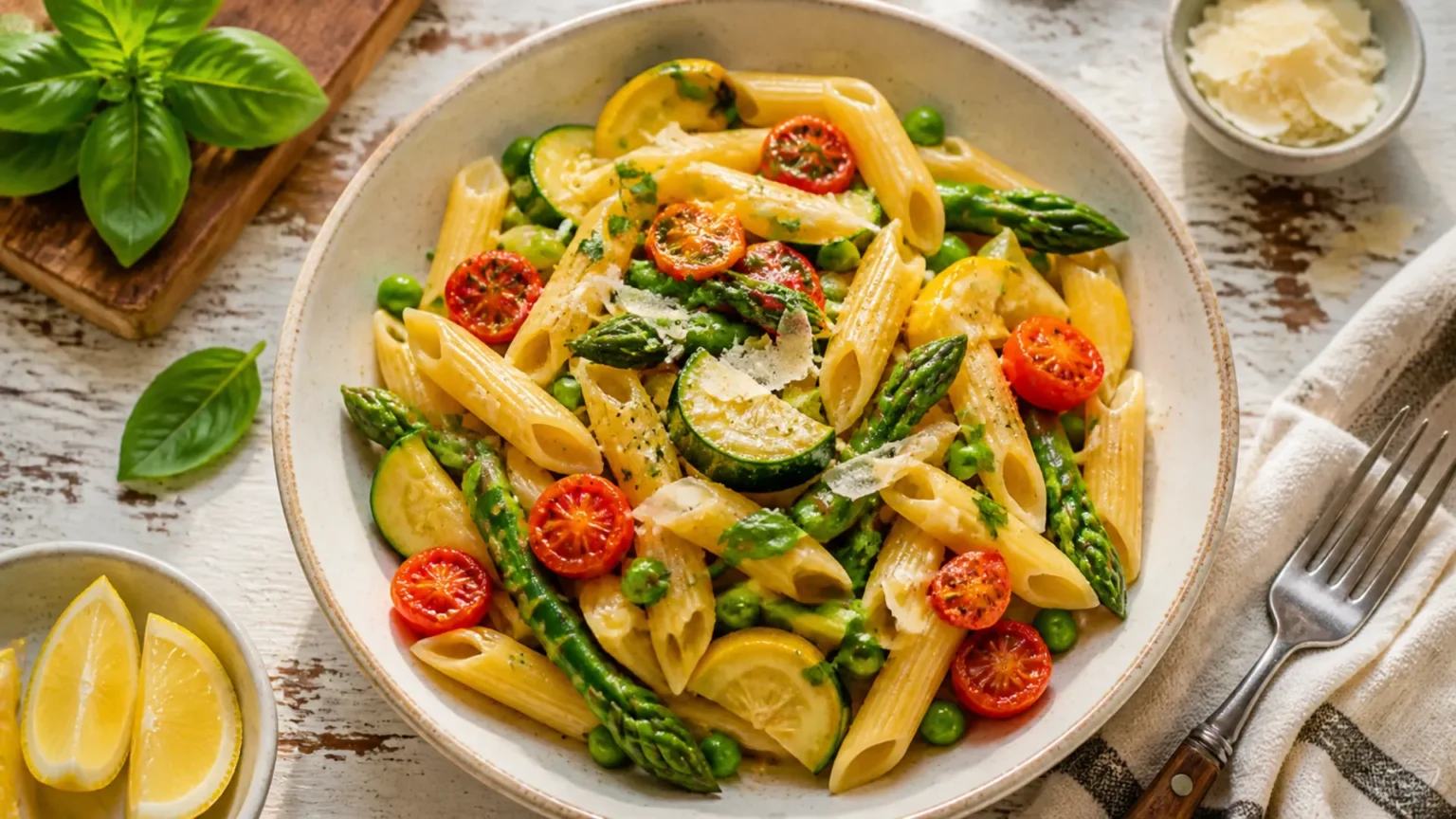
Some recipes just taste like a season — and this easy pasta primavera recipe tastes exactly like spring. The moment I spot asparagus and peas at the market alongside the first zucchini and cherry tomatoes of the year, I know it’s time to make this dish. Colourful, vibrant, and bursting with fresh flavour, it never fails to make the table look beautiful.
I’ve been making pasta primavera for years, and this is the version I keep coming back to. It skips heavy cream in favour of a simple lemon-butter sauce that lets the vegetables truly shine. Everything comes together in one pan (plus a pot for the pasta), and you’re sitting down to dinner in 30 minutes flat. It’s weeknight magic.
Why You’ll Love This Recipe
- Ready in 30 minutes — perfect for busy weeknights
- One pan for the vegetables — minimal washing up
- Endlessly flexible — use whatever vegetables are in season or in your fridge
- Naturally vegetarian, and easy to make vegan with one simple swap
- Light but satisfying — a lemon-butter sauce that coats without weighing you down
- Family-friendly — even picky eaters love the colourful mix of veggies
What Is Pasta Primavera?
Despite the Italian-sounding name, pasta primavera is actually an American dish. It was created in the 1970s at Le Cirque, a famous New York restaurant, and quickly spread across Italian-American restaurant menus around the country. “Primavera” means “spring” in Italian, which perfectly describes the spirit of the dish: a celebration of the season’s freshest, most colourful produce.
The original version used a rich butter and cream sauce with spaghetti. Over the years it has evolved into countless variations — some creamy, some light, some with every vegetable imaginable. This version keeps it simple and bright: a short pasta shape, a handful of the best seasonal vegetables, and a lemon-butter-parmesan sauce that clings to every bite.
Ingredients
For the Pasta & Vegetables
- 340 g (12 oz) penne or fusilli — short pasta shapes work best; they catch sauce and vegetables in every forkful
- 2 tablespoons olive oil
- 3 garlic cloves, minced
- 1 medium zucchini, sliced into half moons
- 1 yellow squash, sliced into half moons
- 1 cup asparagus, woody ends snapped off, cut into 3 cm pieces
- 1 cup cherry tomatoes, halved
- ½ cup frozen peas (no need to thaw)
- 1 small red onion, thinly sliced
- Salt and black pepper, to taste
- Pinch of red pepper flakes (optional, for a little warmth)
For the Lemon-Butter Sauce
- 3 tablespoons unsalted butter
- Juice of 1 lemon (about 3 tablespoons)
- Zest of 1 lemon
- ½ cup freshly grated Parmesan — grate it yourself for the best melt
- ¼ cup reserved pasta water (don’t skip this!)
- Small handful of fresh basil leaves, torn
Notes on Ingredients & Substitutions
Pasta shape: Penne, fusilli, farfalle, or orecchiette all work well. Avoid long pasta like spaghetti — it makes tossing with the vegetables awkward and things end up sliding off your fork.
Vegetables: This recipe is incredibly flexible. The combination above is my tested favourite, but use what’s fresh and seasonal. Broccoli florets, sliced bell peppers, mushrooms, spinach, green beans, or snap peas are all excellent options.
Parmesan: Freshly grated from a block is essential here. Pre-grated cheese contains cellulose, which prevents it from melting smoothly into the sauce.
Vegan option: Swap the butter for olive oil and skip the Parmesan (or use a vegan alternative). The dish is still delicious — finish with a little extra lemon and a drizzle of good olive oil.
Add protein: Grilled chicken, pan-seared shrimp, or even white beans are all great additions if you want a heartier meal.
Step-by-Step Instructions
Step 1: Cook the Pasta
Bring a large pot of well-salted water to a boil. Add the pasta and cook according to packet instructions until just al dente — it should still have a slight bite, as it will continue cooking when tossed with the hot vegetables. Before draining, scoop out at least ½ cup of the starchy pasta water and set it aside. Drain the pasta and toss it with a small drizzle of olive oil to prevent sticking.
Why save pasta water? The starch dissolved in that water is the secret to a silky, clingy sauce. It emulsifies the butter and lemon juice so the sauce coats the pasta instead of pooling at the bottom of the bowl.
Step 2: Sauté the Vegetables
While the pasta cooks, heat 2 tablespoons of olive oil in a large, deep skillet over medium-high heat. Add the red onion and cook for 2 minutes until it begins to soften. Add the garlic and stir for 30 seconds until fragrant.
Add the asparagus, zucchini, and yellow squash. These take a little longer, so they go in first. Cook for 3–4 minutes, stirring occasionally, until just tender but still vibrant green.
Add the cherry tomatoes and peas. Season everything generously with salt, pepper, and a pinch of red pepper flakes if using. Cook for another 1–2 minutes — the tomatoes should just begin to blister and release their juices. Remove the vegetables from the pan and set aside.
The most common mistake: Overcrowding the pan. If you have a small skillet, cook the vegetables in two batches. Crowding causes them to steam instead of sauté, and you’ll end up with dull, soft vegetables instead of the vibrant, lightly charred result you want.
Step 3: Make the Sauce
Reduce the heat to medium. Add the butter to the same skillet and let it melt. Add the lemon juice and zest and stir to combine. Pour in about ¼ cup of the reserved pasta water and stir — you’ll see it come together into a light, glossy sauce.
Step 4: Toss Everything Together
Add the drained pasta to the skillet and toss well to coat in the sauce. Add the Parmesan and toss again until it melts into a lightly creamy coating. Return the vegetables to the pan and gently fold them through. Taste and adjust the seasoning — you may want a little more lemon, salt, or a splash more pasta water to loosen the sauce.
Step 5: Serve
Divide between bowls and finish with torn fresh basil, an extra grating of Parmesan, and a drizzle of good olive oil if you like. Serve immediately — pasta primavera is at its absolute best the moment it comes off the stove.
Pro Tips & Variations
Cut vegetables the same size. This is the single most important technique tip. When everything is roughly the same size, it all finishes cooking at the same time. Aim for pieces about 2–3 cm, small enough to fit on a fork alongside the pasta.
Don’t overcook the vegetables. Pasta primavera is all about freshness and vibrancy. The vegetables should be crisp-tender, not soft and faded. A little bite goes a long way.
Sheet pan variation: Toss the vegetables in olive oil, spread on a baking tray, and roast at 220°C (425°F) for 20–25 minutes. The caramelisation adds an incredible depth of flavour. Toss with the cooked pasta and sauce to finish.
Make it creamy: Stir in 3–4 tablespoons of double cream alongside the butter and lemon for a richer, more restaurant-style sauce.
Add sun-dried tomatoes: A handful of oil-packed sun-dried tomatoes, roughly chopped, adds a sweet, intense tomato flavour that works beautifully here.
Storage & Make-Ahead
Storing leftovers: Allow the pasta to cool completely, then store in an airtight container in the fridge for up to 3 days.
Reheating: Add the pasta to a skillet with a splash of water over medium heat. Toss until warmed through. The pasta water helps revive the sauce. Microwave reheating works too — add a small splash of water and cover loosely.
Can I freeze pasta primavera? I don’t recommend it. The vegetables lose their texture when frozen and thawed, and the sauce can become grainy. This dish is best enjoyed fresh or within a day or two.
Make-ahead tip: Prep and chop all your vegetables the night before and store them in an airtight container in the fridge. When you’re ready to cook, everything comes together in under 15 minutes.
Serving Suggestions
Pasta primavera is satisfying enough to serve on its own as a complete vegetarian meal. If you’d like to round it out:
- Simple green salad with a sharp vinaigrette cuts through the richness beautifully
- Crusty garlic bread is always a hit alongside pasta
- Grilled chicken breast or pan-seared shrimp add protein without overpowering the delicate vegetables
- A glass of crisp white wine — a Pinot Grigio or Sauvignon Blanc pairs perfectly with the lemon and fresh herbs
Frequently Asked Questions
What does “primavera” mean?
“Primavera” is the Italian word for “spring.” The name refers to the dish’s signature feature: an abundance of fresh spring and summer vegetables. Interestingly, pasta primavera was actually invented in New York in the 1970s, not in Italy.
What vegetables go in pasta primavera?
Classically, pasta primavera features spring vegetables like asparagus, peas, zucchini, cherry tomatoes, and onions. However, the dish is very flexible — you can use almost any vegetable that will cook quickly in a skillet. Bell peppers, broccoli, mushrooms, spinach, and carrots all work well.
Can I make pasta primavera without cream?
Absolutely. Many versions of pasta primavera are made without cream, using a lighter sauce of butter, lemon, Parmesan, and starchy pasta water instead. This is the approach used in this recipe, and the result is fresh, bright, and thoroughly satisfying.
What pasta shape is best for primavera?
Short pasta shapes work best — penne, fusilli, farfalle, or orecchiette. They’re easier to eat alongside chunky vegetables and they hold onto the sauce better than long pasta like spaghetti or linguine.
Can I make pasta primavera ahead of time?
The vegetables can be prepped the night before. The full dish is best assembled and served fresh, as the pasta absorbs the sauce as it sits. If you do make it ahead, revive it with a splash of water when reheating and add fresh basil just before serving.
Is pasta primavera vegan?
This recipe as written contains butter and Parmesan, but it’s easy to make vegan. Swap the butter for olive oil and omit or replace the Parmesan with a vegan cheese alternative. Finish with an extra squeeze of lemon and a drizzle of good extra virgin olive oil.
What can I serve with pasta primavera?
Pasta primavera pairs well with a green salad, garlic bread, and a glass of white wine. For a more substantial meal, add grilled chicken, shrimp, or white beans.
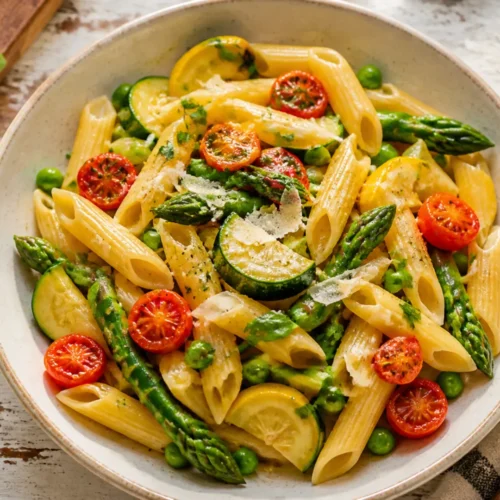
Easy Pasta Primavera Recipe
Equipment
- Large Pot
- Large deep skillet
- Colander
Ingredients
Pasta & Vegetables
- 340 g penne or fusilli pasta or any short pasta shape
- 2 tbsp olive oil
- 3 garlic cloves minced
- 1 medium zucchini sliced into half moons
- 1 medium yellow squash sliced into half moons
- 1 cup asparagus woody ends snapped off, cut into 3 cm pieces
- 1 cup cherry tomatoes halved
- 1/2 cup frozen peas no need to thaw
- 1 small red onion thinly sliced
- salt and black pepper to taste
- 1 pinch red pepper flakes optional
Lemon-Butter Sauce
- 3 tbsp unsalted butter
- 3 tbsp fresh lemon juice about 1 lemon
- 1 tsp lemon zest
- 1/2 cup Parmesan cheese freshly grated from a block
- 1/4 cup reserved pasta water do not skip
- handful fresh basil leaves torn, to serve
Instructions
- Bring a large pot of well-salted water to a boil. Cook the pasta until just al dente according to package instructions. Before draining, scoop out at least ½ cup of pasta water and set aside. Drain the pasta and toss with a drizzle of olive oil to prevent sticking.
- Heat 2 tbsp olive oil in a large deep skillet over medium-high heat. Add the red onion and cook for 2 minutes until softened. Add the garlic and stir for 30 seconds until fragrant.
- Add the asparagus, zucchini, and yellow squash. Cook for 3–4 minutes, stirring occasionally, until just tender but still vibrant. Add the cherry tomatoes and frozen peas. Season with salt, pepper, and red pepper flakes. Cook for 1–2 minutes until tomatoes begin to blister. Remove vegetables from the pan and set aside.
- Reduce heat to medium. Add the butter to the same skillet and let it melt. Add the lemon juice, lemon zest, and ¼ cup of the reserved pasta water. Stir until combined into a light glossy sauce.
- Add the drained pasta to the skillet and toss well to coat in the sauce. Add the Parmesan and toss again until it melts into a lightly creamy coating. Return the vegetables to the pan and gently fold them through. Taste and adjust seasoning — add more pasta water if needed to loosen the sauce.
- Divide between bowls and top with torn fresh basil, extra Parmesan, and a drizzle of olive oil. Serve immediately.